


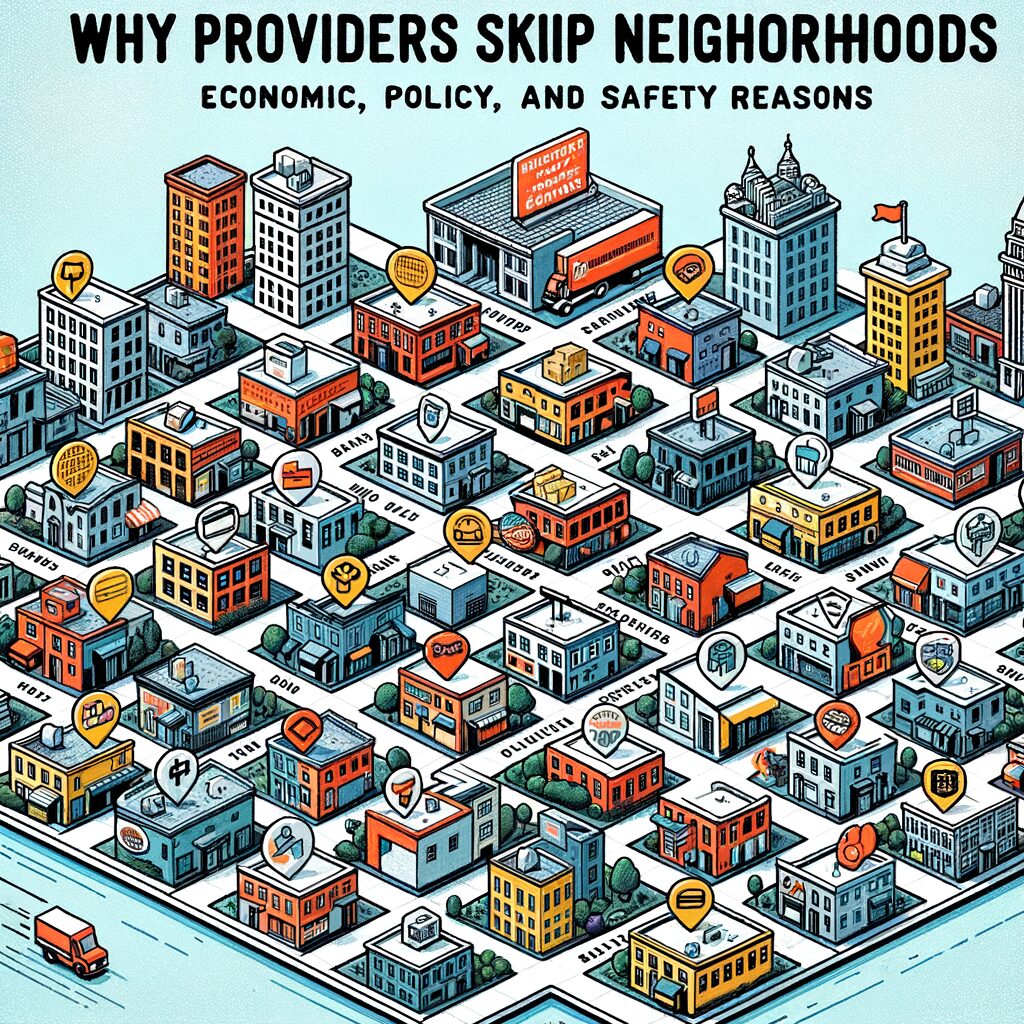
Why Traditional Providers Skip Certain Neighborhoods

Traditional providers — whether banks, internet companies, healthcare networks, or delivery services — often avoid serving specific neighborhoods. The reasons behind these decisions are rarely simple. Economic calculations, infrastructure hurdles, regulatory constraints, and historical injustices all play parts. Understanding why traditional providers skip certain neighborhoods helps communities press for change and explore alternatives.
Economic and Business Considerations
At the core of many decisions is a basic business calculation: cost versus expected return.
- Lower average revenue per user (ARPU): Providers assess how much revenue a new area will produce. Neighborhoods with lower incomes or fewer subscribers can fall below the threshold needed to justify investment.
- High upfront infrastructure costs: Extending fiber, building branches, or establishing logistics routes requires capital. When the per-customer cost is high, providers often prioritize denser, higher-income areas.
- Customer churn and payment risk: Areas with higher churn rates or more payment defaults are seen as higher risk. This reduces the attractiveness of long-term investment.
- Small market size or sparse population: Rural or sparsely populated neighborhoods can be too expensive on a per-customer basis, especially for services dependent on physical presence.
Operational and Logistical Barriers
Practical obstacles can be decisive when planning expansions.
- Geography and terrain: Remote locations, challenging topography, or poor road access make installations and ongoing service costly and unpredictable.
- Aging infrastructure: Some neighborhoods have outdated electrical grids, water lines, or telecommunications conduits that are expensive to retrofit.
- Security and maintenance concerns: High rates of vandalism, theft, or frequent service disruptions can increase operating costs and liabilities.
- Zoning, permitting, and right-of-way issues: Lengthy permitting processes or restrictive zoning can delay projects and inflate costs.
Regulatory and Contractual Constraints
Laws and contracts shape where services can easily expand.
- Franchise agreements and exclusivity: Utilities or cable providers may be bound by exclusive franchise agreements that limit where competitors can build.
- Licensing and compliance: Healthcare and financial services face strict regulatory requirements that can make small or dispersed markets harder to enter.
- Subsidy structures: Public funding and subsidies often target specific projects, leaving out communities that don’t meet program criteria.
Historical and Systemic Causes
Some disparities stem from long-standing policy decisions and structural bias.
- Redlining and disinvestment: Historical practices of denying services or investment to certain neighborhoods have long-term effects on infrastructure quality and economic opportunity.
- Market segregation: Socioeconomic and demographic patterns can concentrate poverty in areas that become unattractive to traditional providers.
- Information and credit bias: Limited credit histories or perceived lack of viable customers can lock neighborhoods into cycles of underinvestment.
Perception Versus Reality
Sometimes providers’ assessments are based on flawed or incomplete information.
- Outdated data: Decisions based on old census or market data can overlook recent revitalization or demographic shifts.
- Overestimated risk: Perceptions of crime or risk may not match current conditions, yet still deter investment.
- Invisible demand: Informal economies or community-sharing practices can mask real demand for services.
What Communities Can Do
Even when traditional providers skip an area, there are practical steps communities can take.
- Organize and aggregate demand: Showing bundled or pre-committed customers can shift a provider’s economics.
- Pursue public-private partnerships: Municipal incentives, tax breaks, or cost-sharing reduce provider risk and spur infrastructure projects.
- Leverage grants and subsidies: State and federal programs sometimes fund underserved areas for broadband, banking access, or healthcare clinics.
- Encourage community-led solutions: Co-ops, local credit unions, and municipal broadband are alternatives that have succeeded where traditional firms hesitated.
- Advocate and collect data: Sharing accurate, current demographic and demand information can counter outdated assumptions.
Moving Forward
Understanding why traditional providers skip certain neighborhoods is the first step toward remedying the problem. While market forces and operational realities play genuine roles, policy choices and community action can tip the balance. With targeted incentives, better data, and creative local solutions, many neighborhoods can attract the services they need — and deserve.
Leave a Reply